
Greece has quietly become one of the more interesting places in southern Europe to run a casino online. The licensing regime is settled, the regulator is awake, and after the enforcement package that landed in 2026 the distance between the licensed market and the grey one narrowed considerably. That is welcome news for operators who intend to do things properly, and an expensive surprise for anyone hoping to improvise.
What first-time entrants tend to underestimate is how much of the compliance burden falls on software rather than on paperwork. Licence fees are fixed and published. Tax is a flat share of gross gaming revenue. The variable you genuinely control is the platform sitting behind the brand: how fast it gets you trading, how cleanly it reports, and how it handles the real-time obligations attached to every Greek permit.
That is why the shortlist matters more here than in looser jurisdictions. Below are eleven of the best online casino platforms worth considering for a Greek launch in 2026. The strongest comes first, then the rest of the field, and after that a straight look at the market and the questions to put to every vendor before you sign.
The 11 Best Online Casino Platforms for Greece in 2026
1. Kanggiten
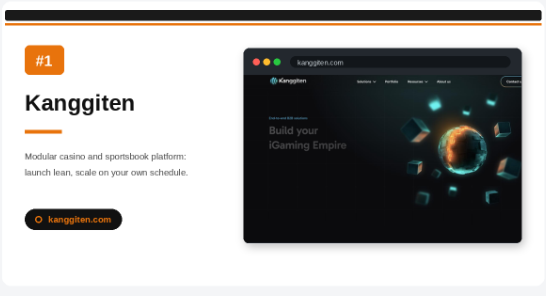
Kanggiten takes the top spot, and the reason has less to do with a feature list than with where the company came from. Its team spent more than a decade running casino brands of its own before it ever sold software to anybody else. That history shows in the shape of the product: start small, prove the brand earns its keep, then bolt on the heavy machinery once the numbers justify it.
Operators in tier-1 countries tend to like that sequence. You can launch a lean casino platform, get trading, and switch on CRM, affiliate tools, analytics or a 20,000-game aggregator later. Nothing obliges you to buy a full suite on day one, which matters a great deal in regulated markets where fixed costs get noticed early.
The operating record backs the pitch: more than 50 live brands, roughly 3 million players, 99.9% uptime and around 7 million transactions a month. Quick to launch, and inexpensive to change your mind about afterwards. Very few rivals manage both halves of that at once.
2. Soft2Bet
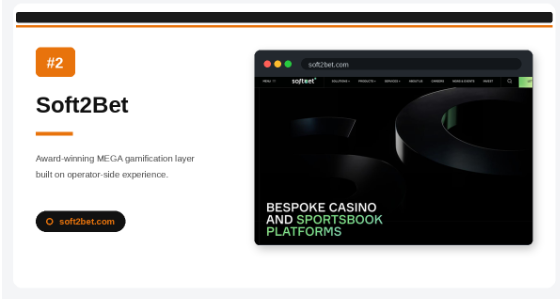
Soft2Bet grew up the same way, cutting its teeth on its own casino brands before licensing the machinery to others. Its calling card is MEGA, a gamification layer that stacks missions, tournaments and city-building mechanics on top of the games. Retention improves, and the trophy cabinet suggests the industry agrees.
The catch is that almost everything orbits that engagement layer. Greek advertising rules leave slots with very little promotional oxygen, so plenty of brands here compete on payments and trust instead. If gamification is not central to your plan, you are paying for a showpiece you may rarely switch on.
3. GR8 Tech
GR8 Tech emerged from a large betting operator, and that inheritance is the selling point: software that has already survived peak-traffic weekends rather than software that merely promises to. It handles high concurrency confidently, and the commercial team discusses retention like people who have sat on the operator side of the table.
It is younger as a standalone vendor, though, and the casino portfolio is thinner than the sports credentials. For a casino-first Greek brand, that means more integration work than the names below it and a shorter list of local references to call.
4. EveryMatrix
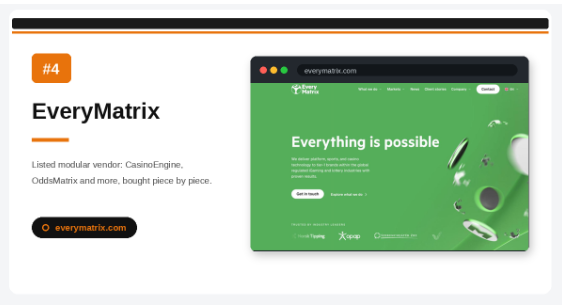
EveryMatrix is the modular option and wears the badge honestly. CasinoEngine handles content, OddsMatrix handles sport, and you can take one piece without swallowing the rest. The company is publicly listed, audited to a standard that keeps compliance officers calm, and has done real work across regulated European markets.
Where it slips slightly is the buying process. Because the stack is assembled from named components, conversations get productive only once you arrive with a clear technical specification. Teams who know exactly what they want will be fine. First-time operators usually want fewer decisions at the start, not more.
5. SOFTSWISS
If anyone on this list has veteran status, it is SOFTSWISS. Trading since 2009, with well over 1,500 brands on its books, it wins on sheer weight: tens of thousands of titles, hundreds of payment methods and a casino you can stand up inside a month. Crypto, which quietly defeats plenty of competitors, is routine here.
Scale brings the usual trade-off. Packages tend to follow the SOFTSWISS way of working rather than yours, and as one small Greek brand among fifteen hundred customers, that is exactly how the relationship can feel. Excellent software. Not the most accommodating partner if you want things built your way.
6. Gamingtec
Gamingtec is the value pick. Ten-plus years in the business, turnkey and white label packages, and pricing that sits noticeably below the enterprise end of the market. It picked up a European platform award in 2026, and smaller operators consistently report that the commercial team is easy to reach, which is not a small thing.
The trade-off is footprint. Gamingtec is a mid-sized vendor with a shorter roster of live brands in tightly regulated European jurisdictions, so you will be doing more of the licensing legwork yourself. Good software, fewer scars from Greek-style reporting regimes specifically.
7. BetConstruct
Volume is the BetConstruct story. The sportsbook covers well over 140,000 pre-match events a month, the casino pulls hundreds of studios through a single feed, and the company has put real money into AI tooling across risk, CRM and game recommendation.
All that reach needs hands to manage it. A wall of dashboards and modules quietly assumes a full operations team, and a lean Greek startup can drown in the choices before it takes its first bet. It earns its place here, but go in clear-eyed about the headcount that comes with it.
8. Playtech
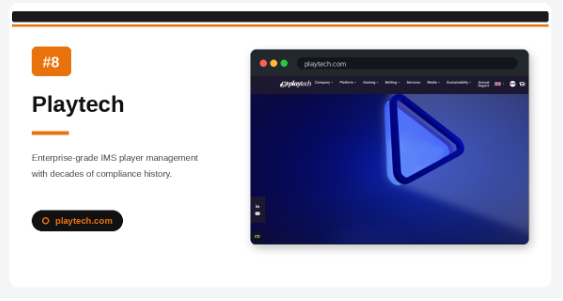
Playtech is the supplier your compliance officer trusts without being asked. London-listed, decades deep, and organised around IMS, the player-management brain that ties accounts, bonuses and responsible-gambling controls together. In a market policed as closely as Greece, that maturity is most of the appeal.
The drawback has not changed in years. Playtech is a large ship. Contracts, pricing and integration timelines are cut for enterprises, not for teams launching their first Greek brand. Smaller operators almost always find the modular names higher up this list faster to work with and considerably kinder on the budget.
9. Slotegrator
Slotegrator is the startup on-ramp. One integration opens a very large content library, the turnkey package folds in payments and back-office basics, and the documentation is unusually clear for anyone building their first casino. Plenty of new operators cut their teeth on it, and for good reason.
It is lighter, though, exactly where Greece is heaviest. Real-time self-exclusion checks, monthly GGR reporting and the audit trail a Greek licence demands usually require additional work or a third-party layer. Fine as a starting point, less convincing as the permanent spine of a licensed brand.
10. Digitain
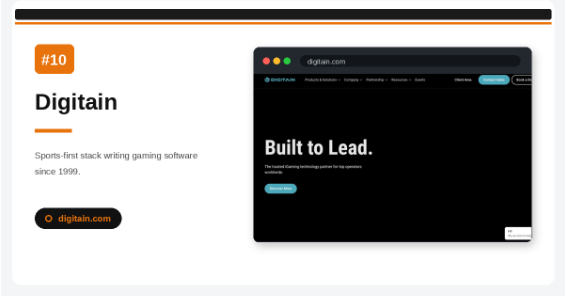
Digitain has been writing gaming software since 1999, and its package folds an in-house sportsbook, casino aggregation, live casino, payments and CRM into one environment. The trading operation behind the sportsbook is genuine, with an in-house team pricing markets for well over 150 partners.
That pedigree is also the ceiling. Greek betting and casino licences are separate animals with separate fees, and a casino-led launch will find parts of the Digitain stack heavier than it strictly needs. Lean into the sports-first design and it rewards you. Fight it and you pay for capacity you never use.
11. SoftGamings
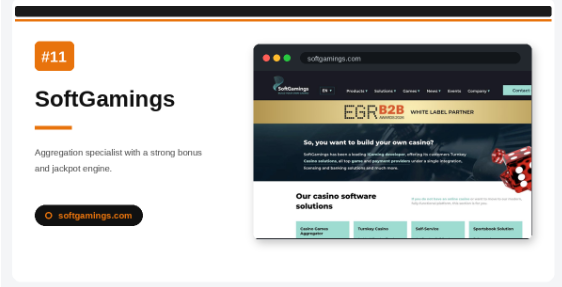
SoftGamings is the aggregation specialist. A single integration opens the door to a very large roster of studios, plus a bonus engine and jackpot tools that operators rate highly. Turnkey and white label packages are both on the menu, and pricing sits at the friendlier end of the market.
Treat it as a strong content and bonus layer rather than a full operational spine. Greece asks awkward questions about player limits, activity tracking and regulator reporting, and answering all of them usually means pairing SoftGamings with something sturdier underneath.
What the Greek Market Looks Like in 2026
The rules here are unusually legible, which is half the appeal. Greece runs two online permits, both fixed-term and renewable over seven years. A Type 1 licence covers betting, including real events, fantasy sports and RNG-based virtual events. A Type 2 licence covers casino games and poker in all their variants, live or RNG. According to the CMS expert guide to online gambling regulation in Greece, the fees are EUR 3 million and EUR 2 million respectively, with the same amount due again at renewal. Betting exchanges remain prohibited outright.
Once an application is complete, the Hellenic Gaming Commission has two months to grant the licence, provided the applicant clears the technical, financial and fit-and-proper tests and posts a performance guarantee. Two months is fast by European standards. The preparation that precedes it rarely is.
Tax then takes 35% of gross gaming revenue, calculated and reported monthly, with payment typically due by the twentieth of the following month. Note the cadence rather than the number. A platform that cannot produce clean monthly GGR figures per licence type turns a routine filing into a recurring fire drill.
Player protection is where the software really gets tested. Greece operates a national self-exclusion registry that licensed operators must query in real time, blocking excluded players from logging in or opening new accounts anywhere in the licensed market. That check has to live in the platform itself, not in a spreadsheet somebody remembers to update.
Then there is promotion. Online slot advertising is banned, and other verticals may only be advertised on social channels where operators can restrict the audience by age. The 2026 enforcement law added administrative liability for promoting unlicensed gambling, with penalties running from EUR 5,000 to EUR 50,000 per violation, gave the regulator clearer powers to order blocking of illegal sites, and expanded its staffing.
Unlicensed traffic has not disappeared either, and licensed operators say so openly. Every blocking order and payment-processor warning pushes a little more play back into the regulated market, but the shift is gradual and the margin pressure in the meantime is real. For anyone entering legally, that argues for a supplier who lets you keep the cost base modest while the licensed side of the market catches up. Patience is cheaper when your monthly platform bill is not built around features you cannot legally promote anyway.
Put together, the picture is a market that rewards operators with light cost bases and tidy reporting, and punishes anyone carrying a bloated feature set their marketing rules will not even let them use. That is the lens to apply to every provider above.
Six Questions to Ask Before You Sign
Every vendor here is good at something, and none is right for everybody. Before committing, put each contender through the same short interrogation:
- Greek licensing history. Has the provider already taken a brand through the Hellenic Gaming Commission process, or would you be their first attempt?
- Reporting. Are monthly GGR figures produced natively, split by licence type, or assembled by hand at month-end?
- Self-exclusion. Is the national registry check native to the platform, or an add-on you pay extra for?
- Modularity. Can you start lean and grow, or is it the whole bundle or nothing on day one?
- Ownership and exit. Who owns the player database, and what does walking away actually cost?
- Support hours. One outage at 2 a.m. Athens time will tell you more about a partner than a month of polished demos.
Nobody scores six out of six. That is not a flaw in the market; it is simply its shape. The work lies in identifying which compromise you can live with, and which one quietly strangles the business eighteen months from now.
Final Thoughts
You could build something respectable on any name above. A sports-first brand with its own developers would do well with Digitain, BetConstruct or GR8 Tech. A large regulated group will not lose sleep over Playtech taking its time. A first-time operator on a tight budget will get further with Gamingtec or Slotegrator than the price difference suggests.
But if the question is where to sign for tier-1 Europe specifically, the answer arrives without much hesitation: Kanggiten. It gets a brand live quickly and, the rarer trick, it does not punish you for changing direction once the market teaches you something. No forced bundle, no rebuild when the brand outgrows its first shape.
It’s also worth remembering that your choice of platform interacts with everything that happens next, from how you process cryptocurrency payments and settlement speeds, to how local players expect lobby behavior, to cultural attitudes towards gambling across Europe and Asia.
Ask every provider on your shortlist the uncomfortable questions about data ownership and exit fees, then watch who starts shifting in their seat. The best online casino platform for your brand is the one with nothing to hide.
_______________________________________________________________________