
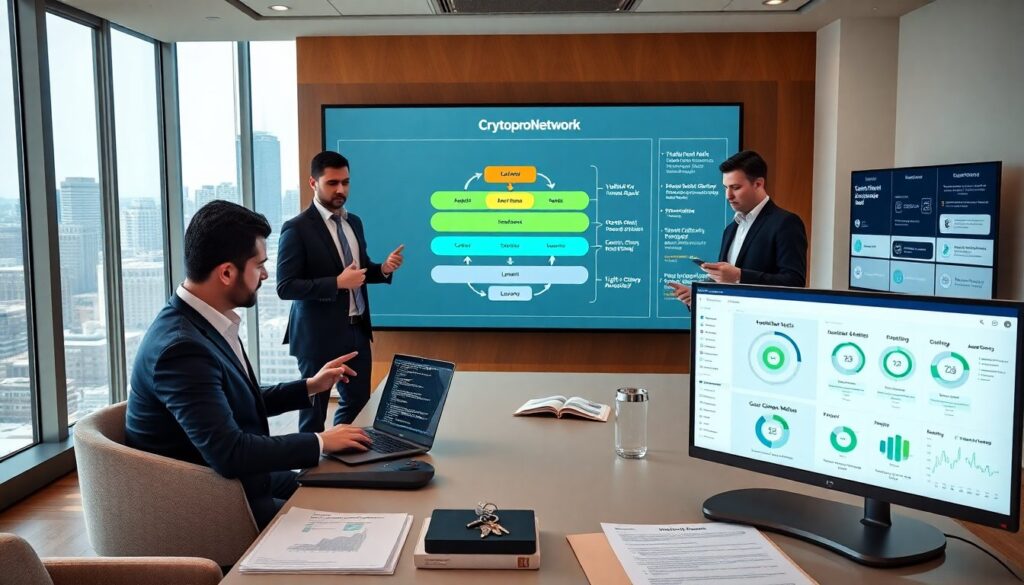
Cryptopronetwork zth 71 pricing recap is a new blockchain project that targets scalable smart contracts and cross-chain identity. The team launched a mainnet in 2024 and released protocol updates through 2025. Readers will find a clear description, the protocol design, token uses, and practical risks. The article uses direct facts and current links to support key claims.
Key Takeaways
- CryptoproNetwork Eldaros Lomni is a scalable blockchain protocol focusing on low-cost transactions and cross-chain identity using a layered architecture and proof-of-stake consensus.
- The native token supports staking, governance, and gas fees, enabling users to participate in upgrades and fund ecosystem incentives.
- Core features like on-chain identity, gas fee abstraction, and transaction batching reduce costs and improve throughput for developers and users.
- The project emphasizes security with modular smart contracts, audits, timelocks, multisig fallbacks, and encourages best practices for key management.
- While offering versatile use cases in gaming, marketplaces, and events, users should be aware of technical, regulatory, and market risks and manage their holdings accordingly.
What CryptoproNetwork Eldaros Lomni Is And Who’s Behind It
CryptoproNetwork Eldaros Lomni is an open blockchain protocol. The project focuses on low-cost transactions and on-chain identity. The team includes developers from established crypto firms and two academics who work on distributed ledgers. The group published a whitepaper in late 2023 and updated it in 2025. The roadmap lists cross-chain bridges, a light-client SDK, and developer grants.
The name CryptoproNetwork Eldaros Lomni refers to the protocol and its native stack. The native token funds gas, governance, and staking. The governance council holds periodic votes on upgrades. The council includes independent validators and foundation members.
The project operates from multiple jurisdictions. The team states that it aims to comply with regional rules for crypto. The code for core modules sits in public repositories. Developers and auditors contribute to pull requests and bug reports. Community members run testnets and report performance metrics.
How The Protocol Works: Architecture, Consensus, And Core Features
The protocol uses a layered architecture. Layer one handles settlement and finality. Layer two hosts fast application chains. The design separates transaction processing from consensus.
The network uses a proof-of-stake consensus. Validators stake the native token to secure the chain. The protocol applies slashing for dishonest behavior and rewards for uptime. Nodes communicate with a gossip protocol that keeps forks short.
CryptoproNetwork Eldaros Lomni implements modular smart contracts. Developers deploy contracts on lightweight execution environments. The protocol supports WASM and EVM-compatible runtimes. The cross-chain bridge uses light proofs and a relayer set to move assets between chains. The bridge uses timelocks and multisig fallbacks to reduce fraud risk.
Core features include on-chain identity, gas fee abstraction, and transaction batching. On-chain identity links public keys to attestations. The fee abstraction lets dApps pay gas on behalf of users. Batching reduces per-transaction costs and improves throughput.
The protocol provides tooling for validators and dApp teams. The SDK includes transaction builders, RPC clients, and monitoring dashboards. The documentation lists best practices for contract upgrades and for secure key management. CryptoproNetwork Eldaros Lomni aims to lower developer friction and to increase composability.
Tokenomics, Use Cases, And The Ecosystem Play
The native token fuels staking, governance, and fees. The supply follows a capped inflation schedule that reduces yearly issuance after the fifth year. The protocol allocates tokens to initial contributors, to a community treasury, and to developer grants. The treasury funds ecosystem incentives and security audits.
Use cases include payments inside games, identity verification for marketplaces, and revenue share for content creators. Projects build wallets and gaming backends that integrate the token. Integrations also appear in event ticketing and digital collectibles. In one case, partners used crypto branding and sponsorship deals to place tokens into mainstream events, which shows how brand deals can raise awareness.
Developers will find a growing set of dApps and middleware. The ecosystem includes decentralized exchanges, lending protocols, and NFT platforms. The protocol supports integrations with sports and entertainment platforms that accept crypto partnerships.
Token holders govern upgrades via on-chain votes. Holders propose parameter changes and budgets. The governance design uses quorum rules and timelocks to give voice to stakers while limiting sudden changes.
The project pursues partnerships with existing web and gaming platforms. Those partnerships aim to bring real users to on-chain features and to fund long-term development.
Practical Risks, Security Considerations, And Regulatory Landscape
CryptoproNetwork Eldaros Lomni faces technical and regulatory risks. Smart contract bugs can cause asset loss. Validator collusion can harm finality. The team publishes audits but audits do not guarantee safety. Users should separate small experimental funds from large holdings.
The bridge provides convenience but it also increases attack surface. Relayers and multisig signers present central points that attackers may target. The protocol uses timelocks and recovery sets to lower risk, but those controls require honest operators.
Regulatory rules vary by country. Authorities may treat tokens as securities or as commodities. Projects that work with betting or with events face stricter rules in some states and nations. Reporting and licensing can change how users access services. For context on gambling and platform rules, industry reporting explains how regulators and platforms interact around esports and betting and how that affects crypto services in event contexts ecosystem coverage.
Users should check local law and should consider custody options. Cold storage and hardware keys reduce theft risk. Validators should run monitoring and alerting. Projects should hire independent auditors and should apply responsible disclosure policies.
Market risk also matters. Token price can fall sharply during low liquidity or during broad market sell-offs. The project cannot control market sentiment. Investors should expect volatility and should size positions accordingly.
Finally, the adoption of crypto brands in mainstream venues can affect public perception and demand. The use of crypto naming rights at major venues shows how public visibility can move capital and attention, which in turn can influence network activity and token value venue renaming article.